
On our summer trip to Key Largo, we got the amazing opportunity to do coral outplant work with a coral restoration organization called I.CARE.
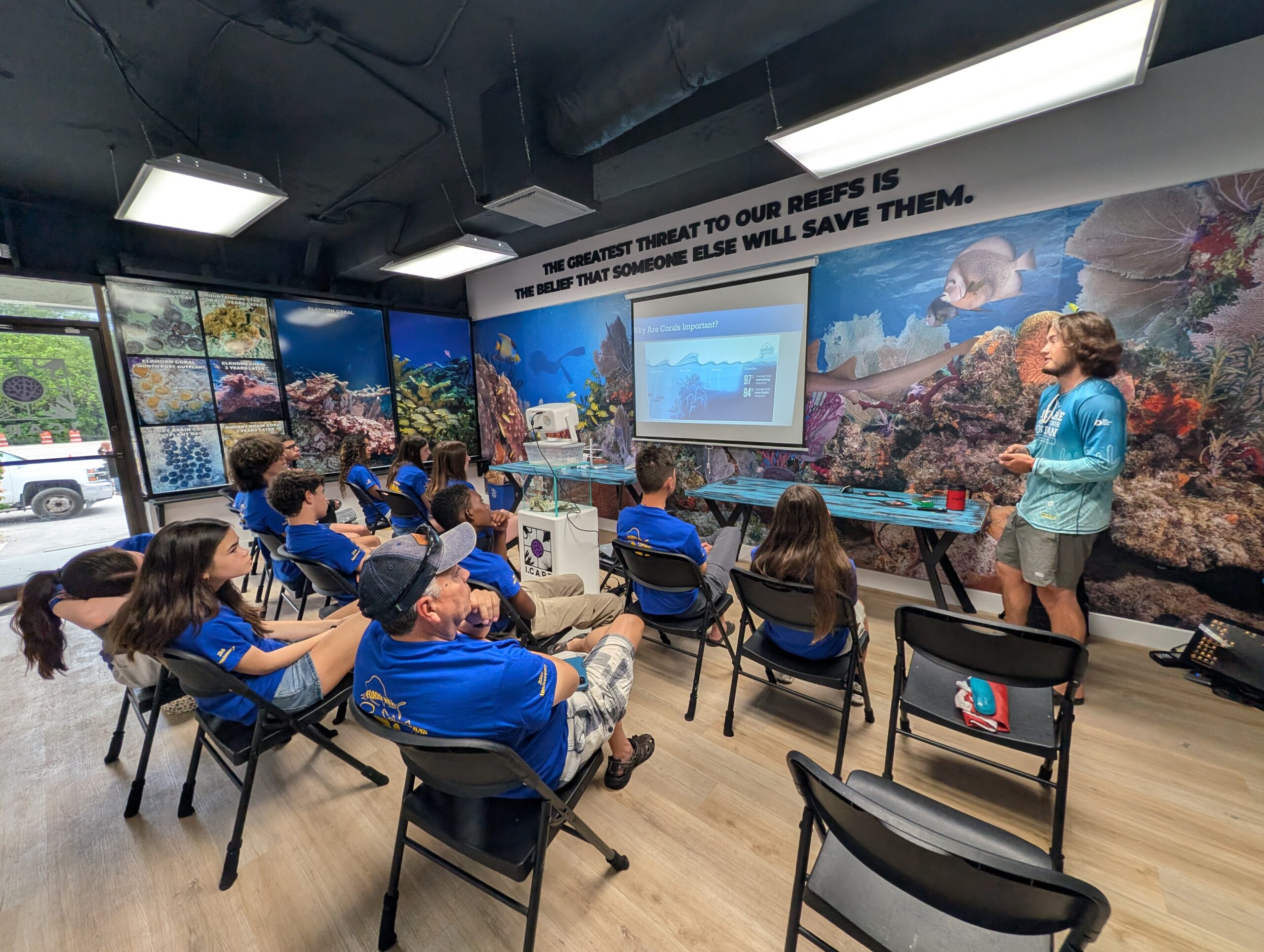
Nauts learn about the current state of Florida reefs and how coral restoration is combating their decline at ICARE in Key Largo.
The day before we outplanted coral, we were on a reef site that allowed us to see just how much impact I.CARE has on Florida reefs. I was able to see so much restored coral and just thought to myself how amazing it is that there is such a difference being made.
Then the next day, we got to work with I.CARE and restore coral for ourselves as SCUBAnauts. It was so fun to work with I.CARE as they gave us the wonderful opportunity to work on the reef, restoring coral into its natural environment.
I.CARE uses civilian volunteers to help combat the loss of Florida’s coral reefs. It is so interesting to see how one organization can do so much to help coral reefs. Then to get involved with those efforts that allowed us to make a change, even in the one day we did coral outplanting.
It was such an educational and fun experience. I personally learned about how much I.CARE has made a change within the reefs and how they focus on how they can get people excited about restoring and protecting reefs.
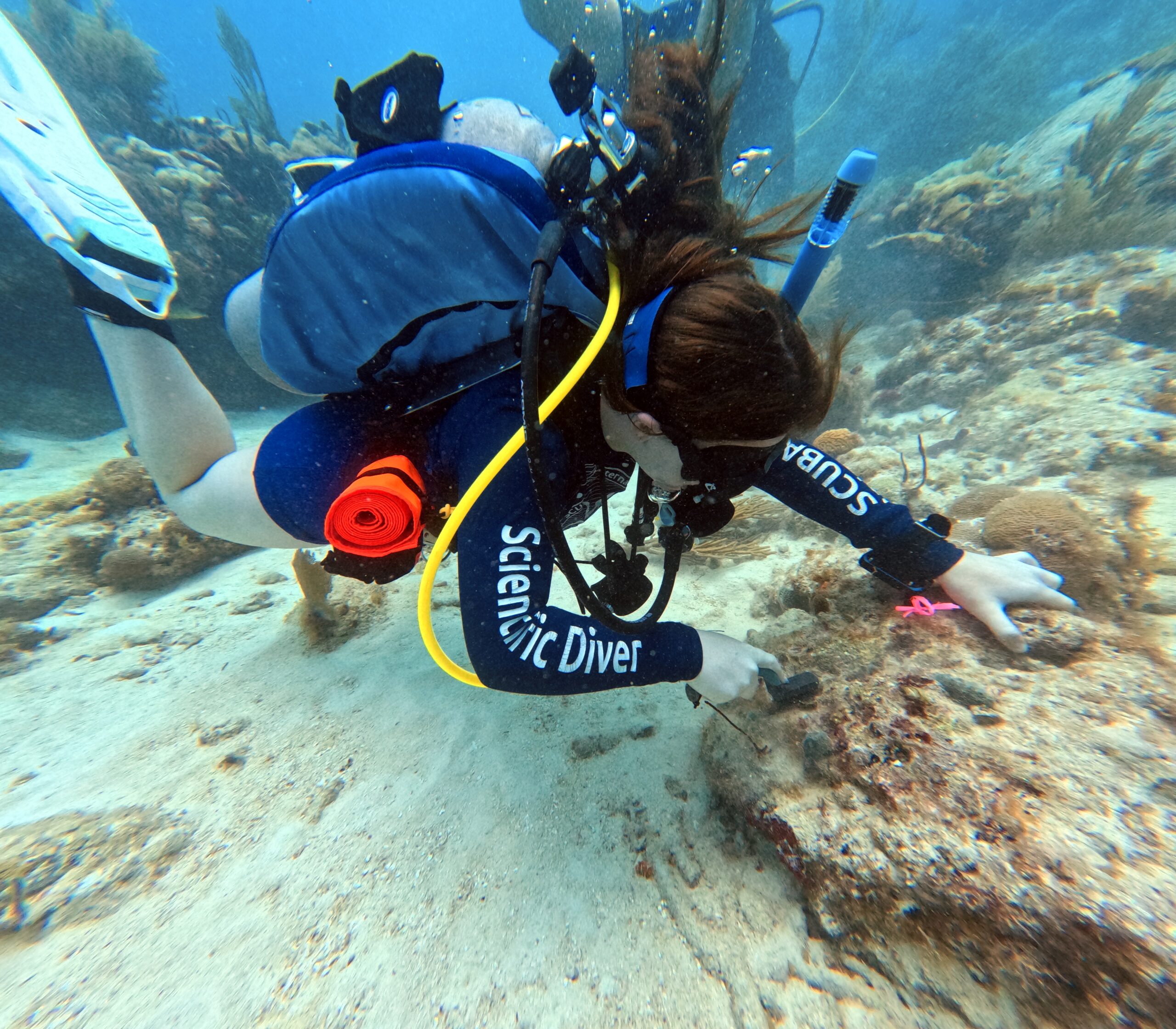
Emma clears fouling algae from the reef to prepare her outplant location.
One Step at a Time
To outplant coral, there are many steps that you have to do to ensure the best chances for the coral’s survival. We practiced these on land first and it was interesting to see the differences.
The first thing we practiced was brushing off the site to expose the substrate underneath the silt and algae buildup. This is so the concrete can stick properly, providing a secure base for the coral to stick to. On land, we used kinetic sand, so it was a bit different working with actual concrete underwater.
For me, learning to work with concrete underwater was so strange. The concrete plumed up underwater and it was so weird to see, and super difficult to keep contained. It didn’t work the same as it would on land and needed to be treated differently to make a working base for the coral to stay in.
Then we learned how to place the coral in the concrete. It was definitely different underwater than on land. On land, we used coral skeletons to practice, and only used 5 fragments, arranging them in a way so they would not touch, but in the water, we had to work with living coral.
You cannot predict the shape of the coral fragment, especially not the ones you are working with in the water, so the shapes I worked with were pretty weird, but the way it came together was so cool to see how to arrange the coral fragments in a way that will stay and grow. It took a lot of changing before the coral structure was good enough to thrive, but in the end, it worked out.
Making an Impact
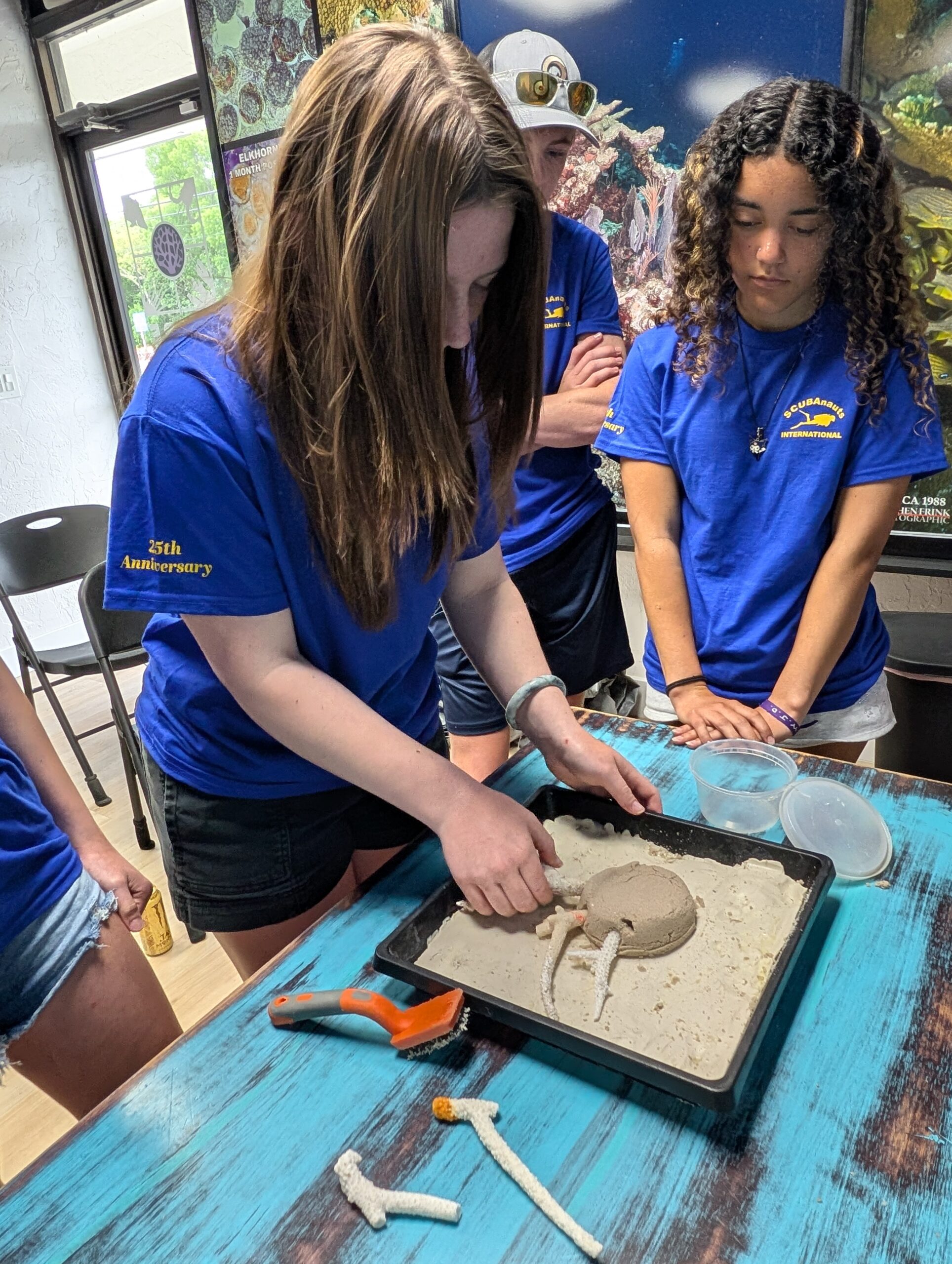
Emma practices coral outplant techniques on land before the dive
It was such a unique experience to actually hold and work with the coral. It was amazing to see how the coral fragments come together through your own work to create a part of the reef that could last an amazingly long time.
I loved this whole experience, but especially seeing the finished product. It was like seeing a whole new perspective on the change you can make for our home, Earth. To then go around the reef again, after finishing our outplanting, was incredible because you could see what we had just outplanted, as well as the past efforts that are bringing our reefs back to life.
— Emma C., 2nd Class Naut, Tampa Chapter