
Although this was my first SCUBAnauts summer trip, I can confidently say that this year’s Summerland Key trip was unlike any other. Staying at Mote’s Elizabeth Moore International Center for Coral Reef Research and Restoration gave all the Nauts a firsthand look at how Mote interns and researchers spend their time in the Keys, through hands-on participation in coral cleaning and creature collection dives.
For me personally, this trip pushed my diving skills and challenged me to grow more comfortable in a real-world scientific environment.
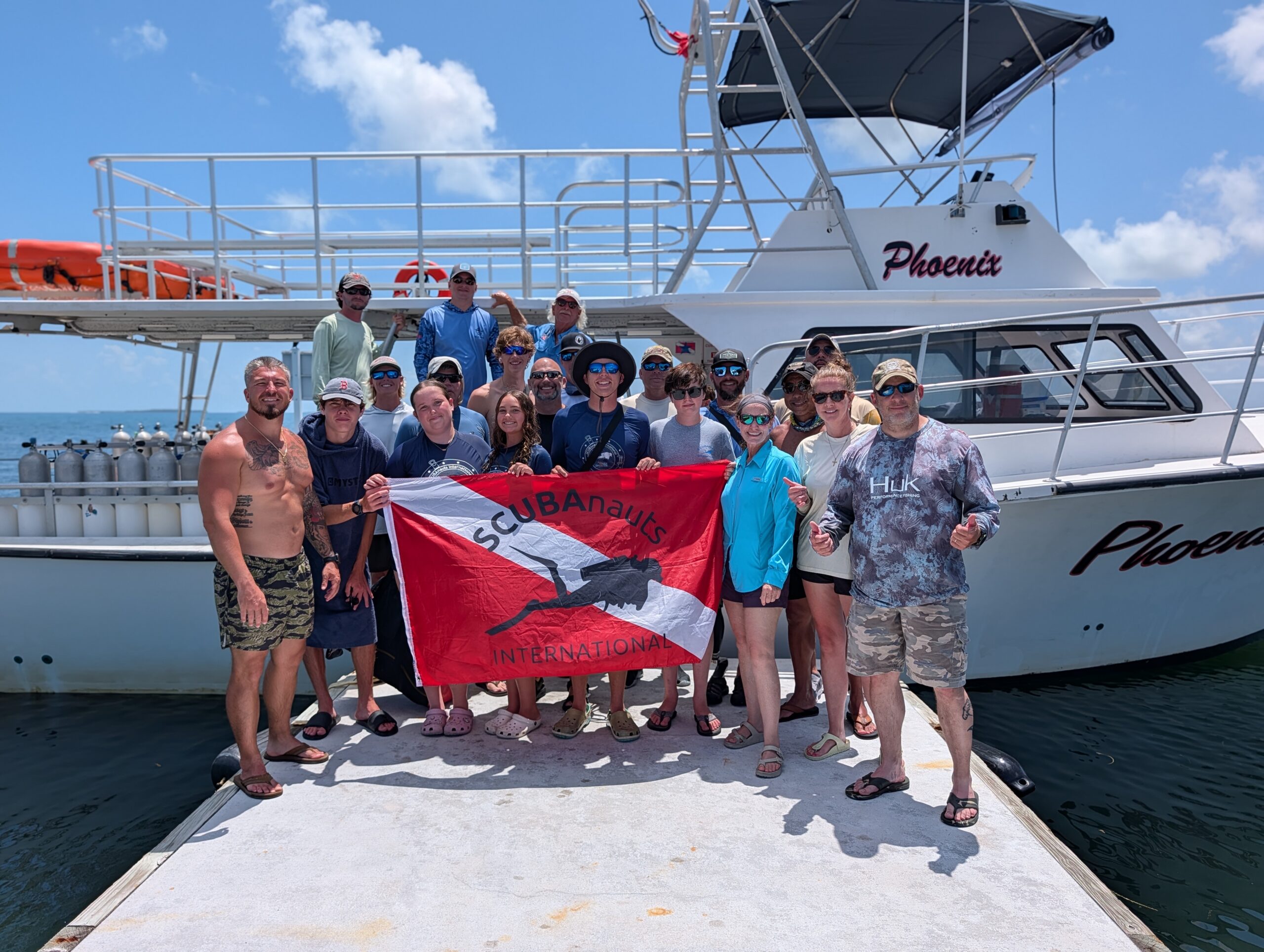
Nauts and veterans head out to dive Key West together.
Days 1 & 2
Our first two days consisted of collecting rugosity and benthic data on the reefs of the lower Florida Keys reef tract to be able to use in our projects at the end of the week and to upload into the SCUBAnauts International database for future use.
After the eighth dive on the second day, we had dinner with members of the Combat Wounded Veteran Challenge, No Person Left Behind, and Mote scientists to discuss the week’s itinerary and brief on Mote’s coral reef restoration efforts.
The presenter described the different steps necessary for successful coral restoration in the order of fragmentation, micro fragmentation, and then placing the newly grown coral recruits in coral nurseries. The presenter also made sure to note there was a potential for fire coral and sea lice, suggesting that everyone wear protection when dealing with corals.
All the Natus, including myself, became very excited when it was announced that there would be a Caribbean King Crab collection happening on Wednesday’s night dive. The Caribbean King Crabs were much larger than I expected, with many spanning nearly six inches across.
Although intimidating at first, Mote uses these crabs because they are excellent algae grazers that help keep coral reefs healthy. Their rapid reproduction also makes them ideal candidates for future restoration efforts. Mote estimates that in the next decade, 2 million of the Caribbean King Crabs will be released onto the Florida Keys Reef Tract and will greatly reduce the algae growing on the reef.
Day 3
After learning about Mote’s restoration efforts, we were briefed on the following day’s dive schedule. Alongside four others, I was picked to do two reef dives with the veterans in Key West the next morning off the Navy Base while the ten other Nauts were to dive off Looe Key and clean coral trees with Mote and the other veterans. Being able to dive with the veterans was a very special experience for the Nau
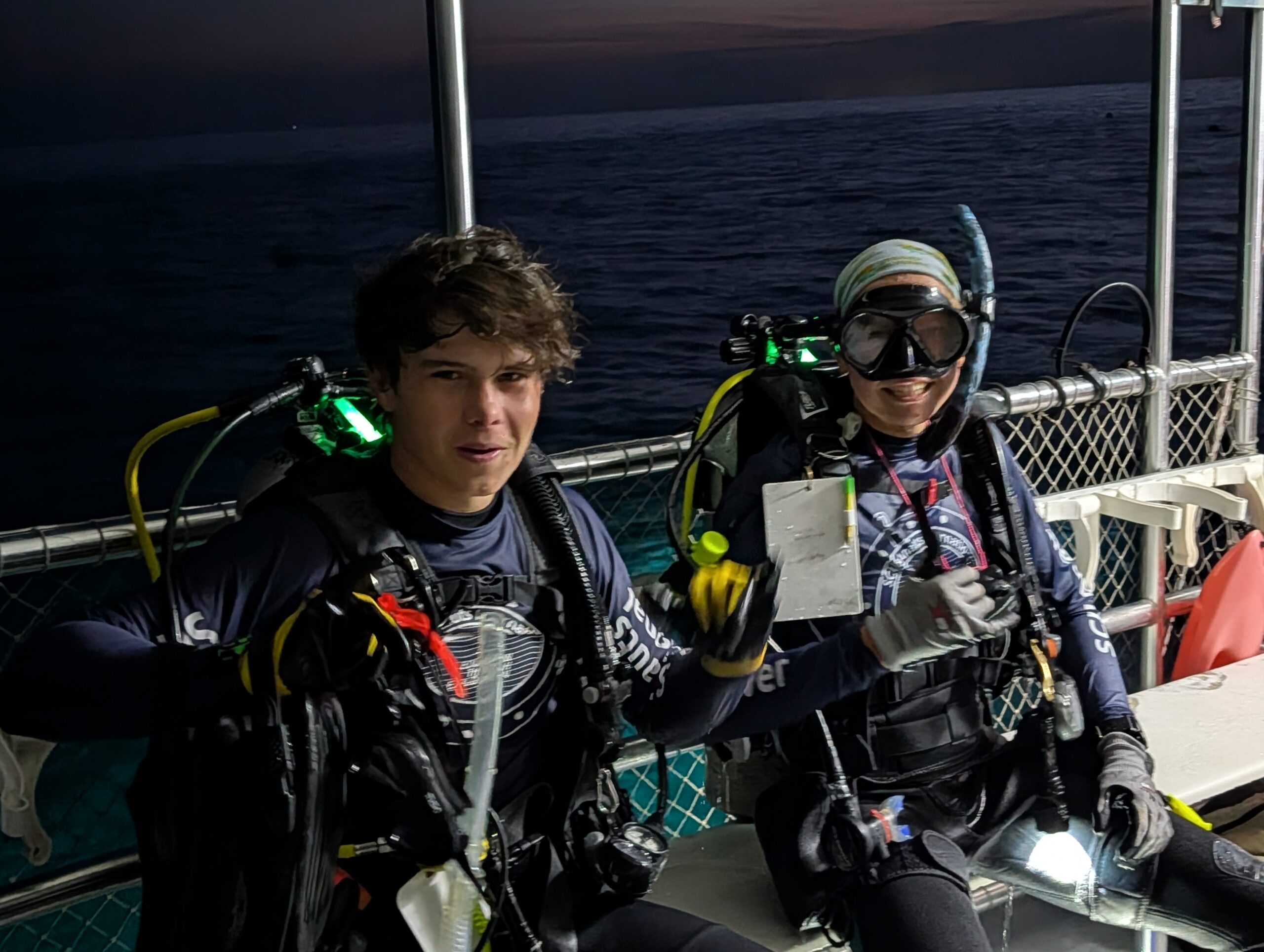
Addison and her dive buddy return from a successful night dive.
Day 4 – Morning
The following morning, five different Nauts went to Key West to do two reef dives with the veterans while the rest of us dove with the veterans and Mote to clean coral recruits and one of the underwater nurseries off Looe Key. My buddy and I worked diligently, cleaning more than 20 of a specific coral phenotype with our toothbrush shaped coral brushes. It was interesting to see how all the algae we were cleaning off attracted so many kinds of fish including a very pesky baby rainbow parrotfish that got close enough to touch.
The second dive of the day was at Newfound Harbour with the goal being to collect four different species of algae eaters so that Mote could breed and outplant them to different reefs in hopes of decreasing algae growth.
This dive was very exciting because we were able to interact with many different species of algae eaters in groups with the veterans. My group found multiple sea urchins and reef crabs hiding under small rock structures but did not have any luck in finding any hermit crabs. One of the veterans in my group made a comment about my crab catching skills which then reminded me of the Caribbean King Crab collection night dive that was happening later that day.
Night
Before the night dive we were all briefed on the differences of diving at night which included knowing how to properly manage a flashlight and stay within arm’s reach of your buddy. Four different teams were decided for the night dive with six Nauts — including myself — assigned to the crab collection team.
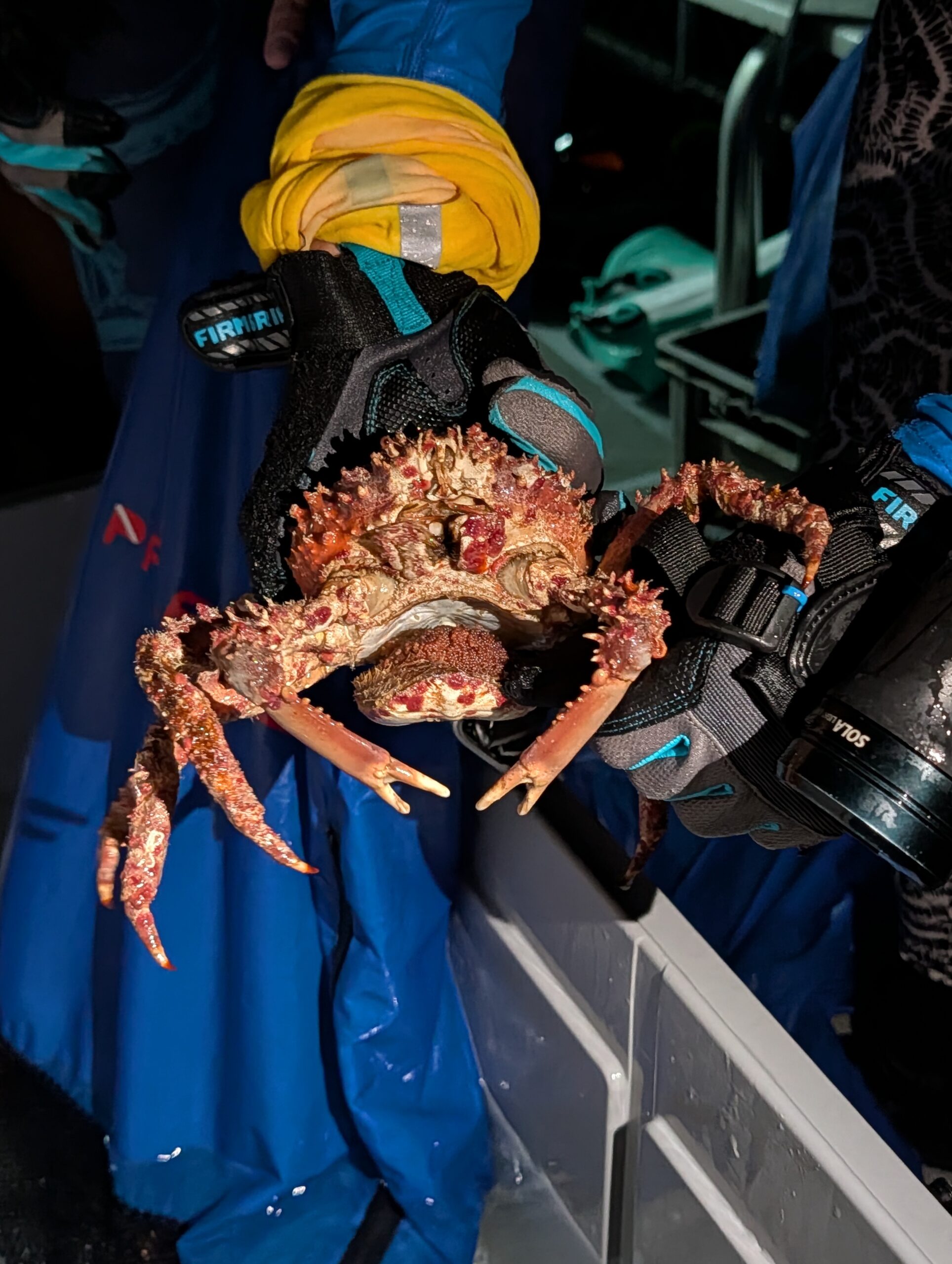
One of six Caribbean King Crabs nauts helped Mote collect during the night dive.
After arriving at the dive site, the two Mote scientists aboard the boat briefed us on the tools we would be using to collect the crabs and reviewed the crab holding technique tha
It took us a while to find the first crab but after that we were able to collect a total of six crabs that night, two of which had eggs. Collecting Caribbean King Crabs at night was unlike any dive I had done before. It combined scientific research with adventure and showed me how creative restoration efforts can be.
With this trip being my first ever SCUBAnauts trip, I couldn’t have asked for a better introduction to the organization. Throughout the week, I gained hands-on experience in coral reef monitoring, coral restoration, and marine conservation while working alongside Mote scientists, Combat Wounded Veterans, and fellow Nauts. Every dive offered a new opportunity to learn, whether it was collecting scientific data, cleaning coral nurseries, searching for algae grazers, or capturing Caribbean King Crabs for Mote’s restoration program.
— Addison G., Naut-in-Training, Sarasota Chapter