
Over the weekend, SCUBAnauts from across Florida traveled down to Summerland Key to spend three days working alongside the scientists at Mote Marine Laboratory’s Elizabeth Moore International Center for Coral Reef Research & Restoration. The trip was packed — two days on the water and one land day — but what made it really work was how carefully everything was planned out. Every naut got an equal shot at every skill the weekend had to offer, which meant no one walked away having missed a piece of the mission.
Day One and Two: Brushes at the Nursery
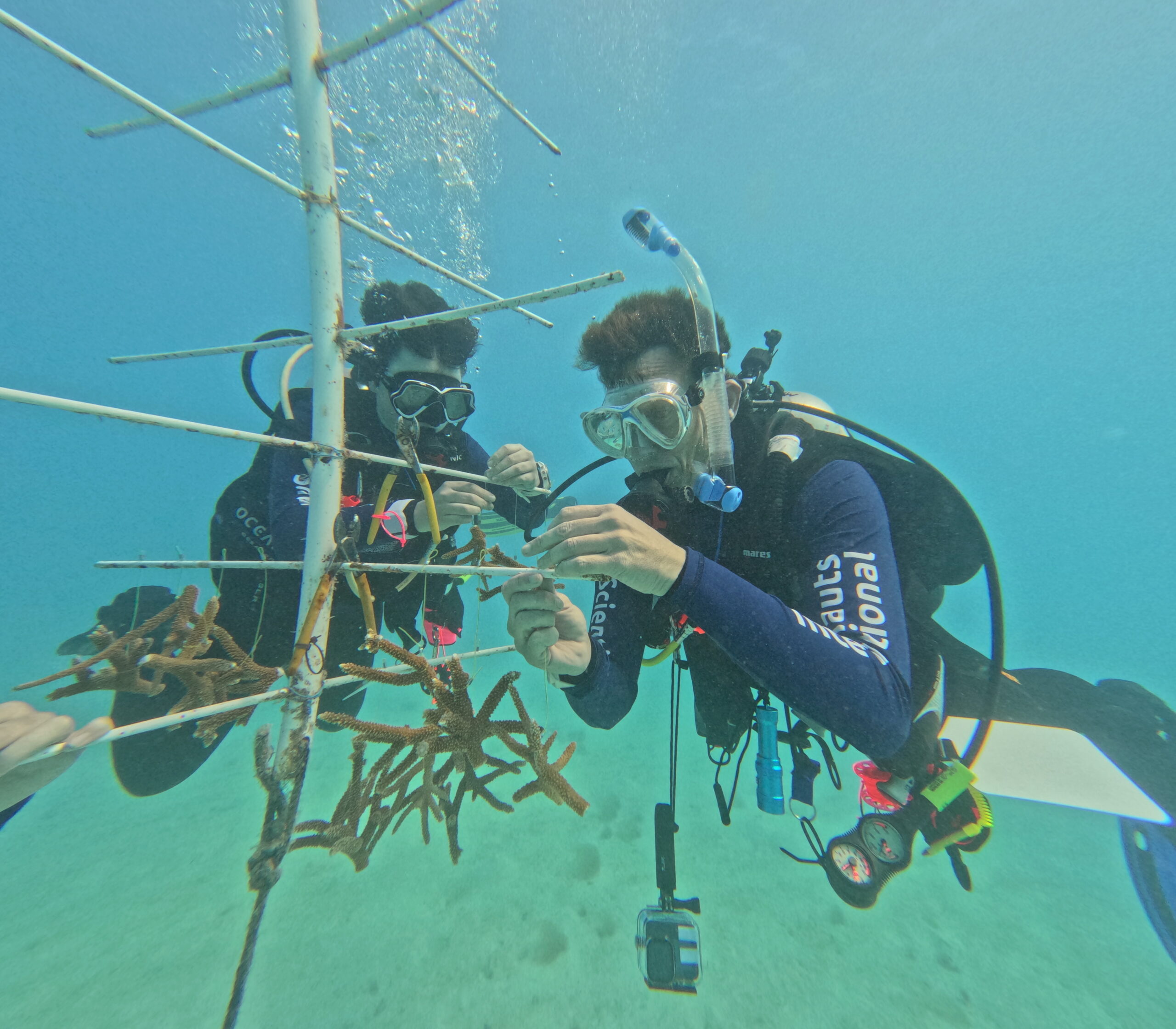
Nauts hang newly cut coral fragments on a tree in the Sand Key nursery.
Our first two days were spent out on the water, where each of us got in two to three dives at Mote’s offshore coral nursery. The job sounds simple on paper — clean the coral trees — but anyone who has done it knows the ocean never leaves anything uncovered for long. Using sturdy wire brushes, we worked our way down each PVC tree, scrubbing off the algae and growth that had built up around the hanging coral fragments.
Clean trees mean better water flow, better nutrient delivery, and healthier coral. It’s one of those quiet, repetitive tasks that doesn’t feel glamorous in the moment but makes a huge difference in how quickly the nursery can grow.
Day Three: Fragging
By day three, every tree had been cleaned, which meant we got to move into the next phase of the process: coral fragging. Fragging is exactly what it sounds like — carefully clipping branches off the main coral stem so that each branch becomes its own growing piece. It’s the same principle behind propagating a plant from a cutting, except underwater and with animals. One coral becomes ten. Ten becomes a hundred. That’s how Mote has built a nursery of hundreds of thousands of fragments over the years.
Later, the Mote team takes those grown fragments through the outplanting process, where they’re transplanted back onto damaged reefs in a controlled, calculated way. We don’t do the outplanting ourselves, but knowing that the corals we fragged and hung will eventually end up reviving a real reef is what made every dive feel purposeful.
Land Day: The Coral Saw
Our land day was just as hands-on. We learned to frag coral using a coral saw, and between all of us we turned pieces of parent coral into hundreds of smaller fragments. Those pieces will grow in the nursery and one day be outplanted onto thriving reefs somewhere in the Keys. Standing at the saw, it hit me that every tiny fragment in front of me was a future piece of living reef.
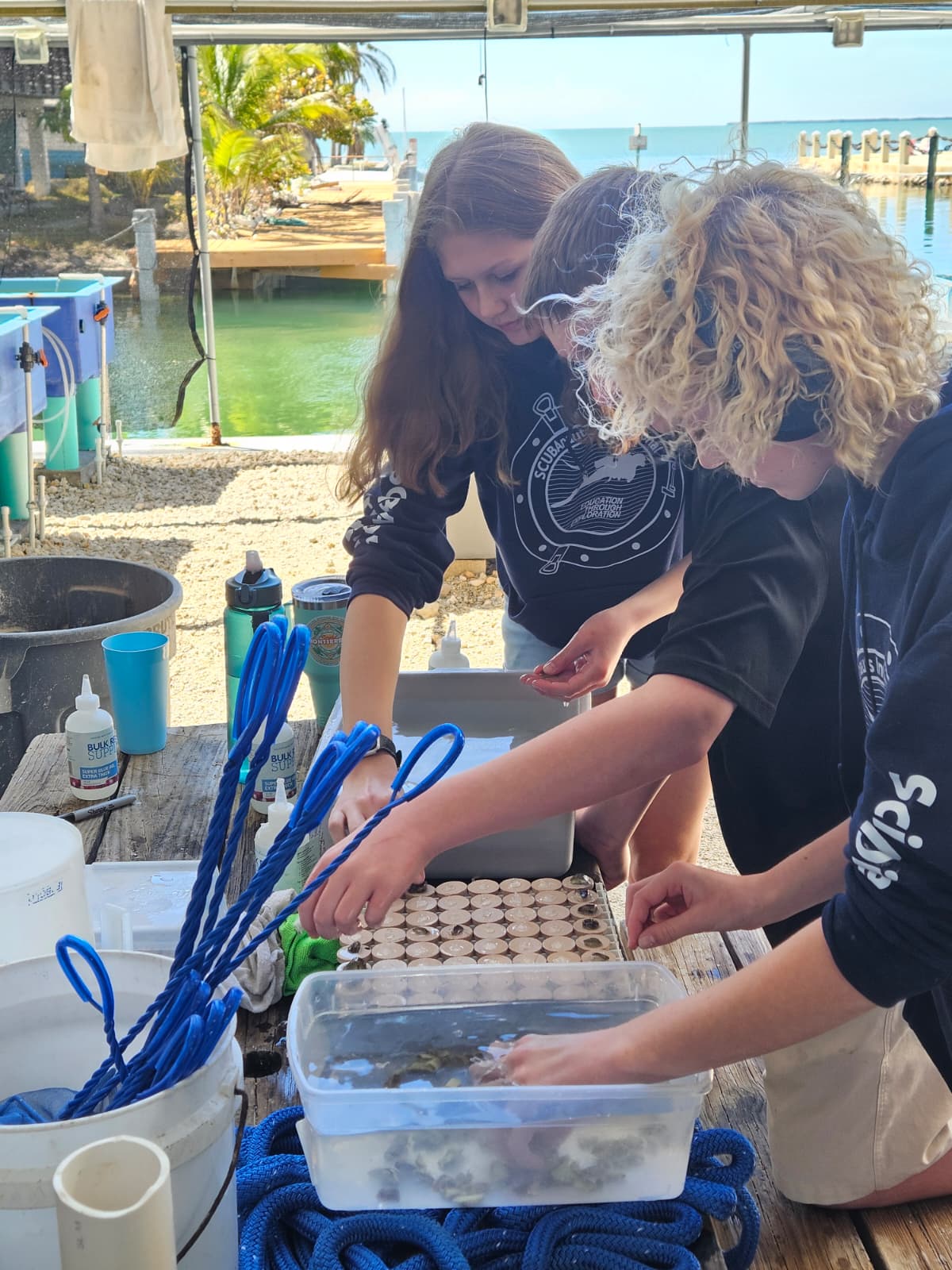
Nauts cut coral fragments with the diamond saw at Mote.
Evenings
Each night we gathered together to decompress, but also to keep learning. We talked through different scientific institutes involved in coral restoration and how their work fits into the bigger picture. We watched documentaries, shared what stuck with us from the day, and filled out our dive logs. It was a nice way to close out long days on the water — everyone tired, everyone a little sunburned, but all of us still talking about coral.
Final Thoughts
This weekend was one of the most educational and rewarding trips I’ve been on with SCUBAnauts. The combination of real scientific work, great people, and time spent at one of the most respected coral restoration facilities in the world made it unforgettable. Huge thanks to the team at Mote, our leaders, volunteers, and every naut who made the weekend what it was.
Until the next trip,
Natalia F., Naut-in-Training, Tampa Chapter